


Apprenticeship mentors in California are central to the decisions this guide explores. If you are thinking about a career in the skilled trades, understanding the role of an apprenticeship mentor in California could be the most important thing you do before filling out a single application. In California, an apprenticeship mentor guides and trains new workers in a specific trade, translating what feels overwhelming into something manageable, week by week. Apprentices earn while they learn from day one, but earning and lasting are two different things. Mentorship is the bridge between curiosity and a real career. Trades for All exists to make that bridge shorter for everyone in California, especially those who have never had someone in the trades to call for advice.
Quick Framing and Audience
This article is for you if you are a high school student exploring alternatives to a four-year university, a career changer looking for stability and pay that grows with your skills, a veteran translating military training into civilian credentials, a returning citizen rebuilding a foundation, or a woman or non-binary person who wants to see yourself reflected in the trades. It is also for the parents, educators, and counselors helping these individuals move forward.
The focus here is specific: mentorship as the practical tool that turns interest into persistence. Not generic encouragement. Not a list of trades. This is about what a mentor does, why it matters at the beginning, and how you find one in California right now.
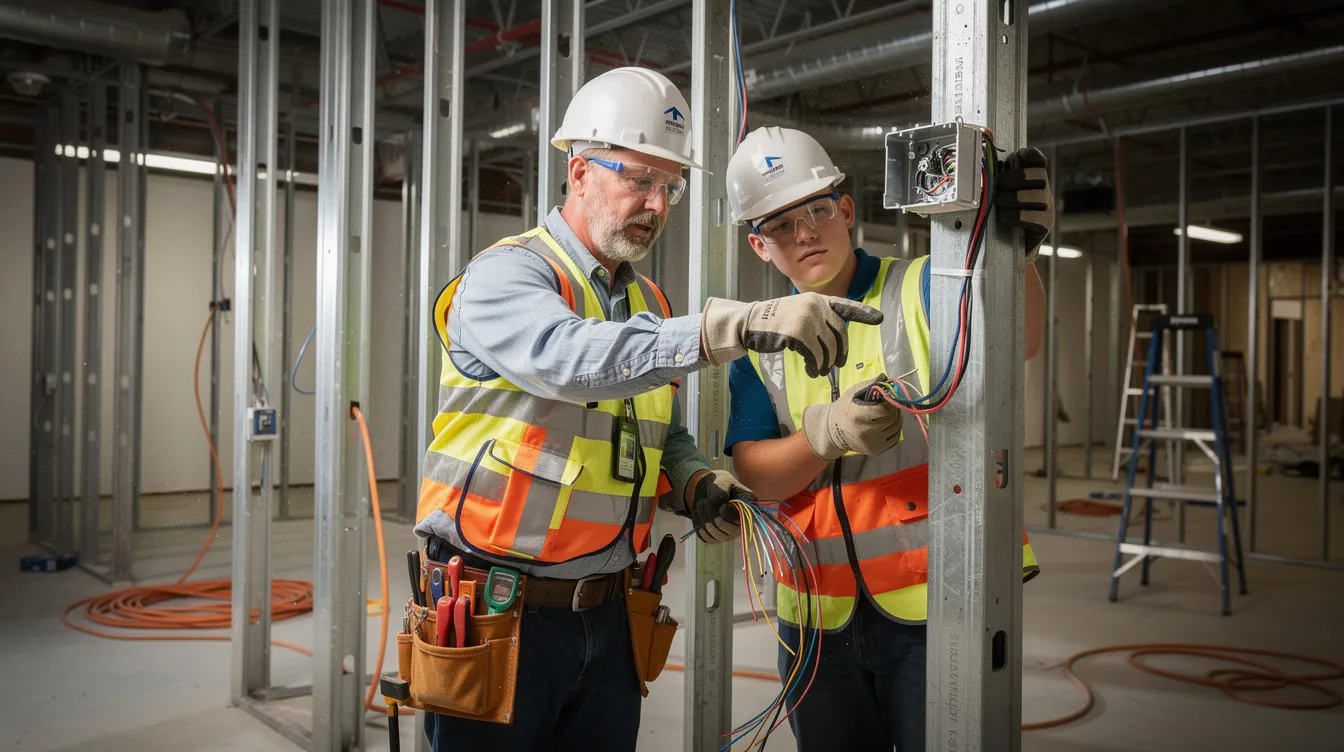
What an Apprenticeship Mentor Actually Does in California
Mentorship in California’s apprenticeship programs often includes structured on-the-job training alongside classroom instruction. But a mentor is more than a supervisor checking boxes. Think of them as a coach, guide, and accountability partner wrapped into one person who has already walked the path you are starting.
To become a mentor, one must achieve journeyworker status and gain approval from a program sponsor. Many apprenticeship mentors are selected for their experience and ability to teach effectively. California does not have a statewide mentor license; criteria are tied to specific programs. Mentors often complete training covering coaching strategies and evaluating workplace competencies before they are paired with an apprentice.
Three concrete actions mentors take on job sites:
- Mentors provide hands-on skill transfer by demonstrating complex tasks step by step, whether that means bending conduit, reading a blueprint, or setting up fall protection.
- Mentors monitor apprentices to enforce strict industry safety standards, checking PPE, correcting technique in real time, and modeling safe habits.
- Mentors ensure state-certified skill standards and safety protocols are effectively transferred through structured feedback after each task.
An effective mentor demonstrates a commitment to safety and ethical practices in their field. They should have patience and strong communication skills to teach practical job skills effectively.
Beyond the jobsite, mentors assist with paperwork: logging hours on DAS forms, tracking progression through required work processes, and helping you create or log into an online account to submit applications or register for related instruction. And mentorship can begin well before formal apprenticeship entry. Pre-apprenticeship programs, community college courses, and job shadowing all create space for a mentor relationship to develop early.
Why Mentorship Matters Most at the Start
The first 90 days of any apprenticeship are where most confusion happens. You may not know how your classroom instruction connects to what you are doing on the site, when your next wage increase is, or what you are supposed to bring on day one. A strong mentor helps build confidence and independence in apprentices by modeling workplace expectations, from showing up early to asking the right questions during a crew meeting.
Mentors play a crucial role in connecting classroom learning to real work situations. When you learn about the National Electrical Code in a classroom, your mentor is the person who walks you through the same code section while you are standing in front of a panel on a live project. Effective apprenticeship mentors offer regular constructive feedback and track progress, so you always know where you stand.
For first-generation trades workers (people without family in the trades), mentorship fills a gap that no website or brochure can. A mentor teaches you the language of the jobsite, tells you where to buy tools at a fair price, and helps you develop the performance habits that lead to advancement. They help you prepare for what is coming next instead of reacting after you have already fallen behind.
Students Pursuing Pre-Apprenticeship and Apprenticeship
The pathway from curiosity to career typically follows a clear sequence:
- Exploration: High school CTE courses, site visits, career quizzes, and job shadowing.
- Pre-apprenticeship: A structured program (often 11 to 16 weeks) that covers safety, tools, work readiness, and trade-specific skills.
- Apprenticeship entry: Application and selection into a DAS-registered apprenticeship program with paid on-the-job training and classroom instruction.
Apprenticeships in California are overseen by the Division of Apprenticeship Standards. Apprenticeship programs provide structured training and career growth opportunities, whether you are entering from a high school district, a community college, or a workforce program.
California community colleges partner with local industries to provide mentorship opportunities, which means students pursuing a trade can connect with mentors before they ever set foot on a jobsite. Career changers follow the same map; many pre-apprenticeship programs serve applicants of all ages and backgrounds.

Classroom Instruction and On-the-Job Mentoring
Classroom instruction covers theory: trade codes, blueprint reading, math, and safety regulations. On-the-job mentoring is where that theory becomes muscle memory. A mentor reinforces what you learn in the classroom by assigning tasks that mirror the week’s lessons and giving you feedback as you complete them.
Sample weekly schedule for an apprentice in electrical or plumbing:
| Day | Activity |
|---|---|
| Monday, Wednesday, Friday | On-site work under mentor: task assignments, tool use, hands-on installations |
| Tuesday afternoon | Related and supplemental instruction: trade code, blueprint reading, safety theory |
| Thursday | Mentor shadowing, feedback session, paperwork review (hours, work process checklists) |
| Saturday (optional) | Open lab, peer group, tool practice, or trade safety workshop |
This model ensures you don’t learn in isolation. Your mentor creates the thread between what you hear in a lecture and what you do with your hands.
How California Apprenticeship Programs Pair Mentorship with Access
The California Division of Apprenticeship Standards provides resources for finding apprenticeship mentors and oversees program quality statewide. Within DAS-registered pathways, apprentices are assigned to journey-level workers who serve as mentors throughout their training. California offers various accelerated apprenticeship training programs for those with transferable skills or prior experience.
California recently received $18 million in government support to train 55,000 apprentices in building and construction trades. As of January 1, 2020, new statutes require skilled workforce standards on public works projects. California’s Skilled and Trained Workforce laws apply to public works jobs and require that 30% of journeypersons in certain trades must graduate from approved programs. California requires 60% of journey-persons to graduate from apprenticeship programs, reinforcing the value of structured mentorship-based training at every level. The apprenticeship program supports activities from July 1, 2026, opening new funding and training cycles.
ERiCA-funded outreach in Southern California, which powers Trades for All, focuses specifically on connecting underrepresented job seekers with mentorship, pre-apprenticeship readiness, and wraparound support (transportation, tools, case management) across Orange, Riverside, San Bernardino, Los Angeles, and Ventura Counties.
SoCal case example: The WIRE program in the Inland Empire ran an 11-week electrical readiness curriculum with mentorship for its first cohort of 11 women. All 11 graduated, seven were offered IBEW apprenticeship entry, and five were designated as apprentices by November 2025.
Who Benefits Most from a Mentor in the Trades
Women and non-binary job seekers: Mentorship mitigates barriers that go beyond skills: navigating male-majority jobsite culture, finding properly fitting safety gear, balancing caregiving schedules, and having someone in your corner when you hear that you do not belong. Programs that pair women with culturally competent mentors (or mentors who are women themselves) consistently show stronger retention. Women veterans face approximately 10% unemployment compared to 6% for male veterans, making mentorship an even more critical bridge. The Mentor-Apprentice Program offers funding between $6,500 and $21,000, which can help offset costs for eligible participants from underrepresented groups.
Veterans: You bring discipline, technical training, and chain-of-command familiarity. A mentor helps you translate those skills into civilian trade credentials, navigate GI Bill benefits, and integrate into a team culture that operates differently from the military. Many apprenticeship pathways also lead to full-time work as you transition into civilian careers. California’s apprenticeship system actively recruits veterans and provides support.
Returning citizens: Mentors help you navigate background check questions, understand employer expectations, and access fair chance policies. A mentor who knows the system can connect you with pre-apprenticeship programs that prioritize justice-impacted individuals.
Students without family trades connections: If no one in your family has worked in the trades, a mentor becomes your source of the insider knowledge that others inherit. They teach you the unwritten rules, help you set goals, and create accountability that keeps you moving forward.

What to Ask a Prospective Mentor or Program
Finding a good mentor often starts through state networks, local unions, or educational institutions. Once you identify a prospective mentor or program, ask direct questions:
Schedules and timelines:
- How many hours of on-the-job training and related instruction are required each week?
- How long until I reach journeyperson status or hit the next wage step?
- When are classroom sessions held (evenings, weekends, during the workday)?
Transportation and tools:
- Do you provide tool allowances, grants, or loan programs?
- Is reliable transportation required, and do you assist with transit passes or mileage support?
- What safety gear and work boots are required on the first day of training?
Jobsite culture and safety:
- What safety training is provided (OSHA 10, OSHA 30, site-specific)?
- How does the program or team handle harassment, exclusion, or discrimination?
- Can I hear from current or former apprentices about their experience?
Red flags to watch for:
- No feedback beyond task assignments
- Vague timelines with no clarity on wage increases or advancement
- High fees with no support or financial aid options
- Safety shortcuts or dismissive responses to inclusion questions
- Related instruction promised but not delivered
How to Find Mentorship Support in California Right Now
California’s apprenticeship application period opens annually. The 2026 apprenticeship application period opens on March 3, 2026, and applications for the 2026 cycle close on April 27, 2026. An external panel reviews eligible applications, typically within two to three months after closing. Notifications for the 2026 cycle will be sent in late June.
Here is how to get started before or during that window:
- Take the Trades for All career quiz to identify which trades match your skills, values, and lifestyle.
- Contact Trades for All via the website contact form. Mention your region (Orange County, Riverside, Los Angeles, or elsewhere) and your trade interest. The team can connect you to pre-apprenticeship referrals and mentor support.
- Explore DAS-registered pre-apprenticeship programs through the California Division of Apprenticeship Standards. Filter by geography and trade.
- Listen to the Trades for All podcast to hear real stories from mentors and apprentices about what the journey looks like, what challenges they solved, and what they wish they had known at the beginning.
San Diego Mentorship Examples and Referral Steps
In San Diego, the SoCal Pre Apprenticeship Program offers a 16-week course with case managers who serve as mentorship support for participants. The program prioritizes underserved communities, women, and justice-impacted individuals, with three lessons per week focused on trade-specific skills and work readiness.
A short local pathway example: A high school student in the San Diego district could start with a CTE pathway in electrical work, connect with SoCal Pre-Apprenticeship for readiness prep, be assigned a case manager who serves as a mentor, apply to an IBEW apprenticeship cohort, and begin earning while completing classroom instruction through a community college. This model extends across broader SoCal counties, including Orange, Riverside, San Bernardino, Los Angeles, and Ventura, where similar pre-apprenticeship resources and referral pathways are present through Trades for All and its partners.
Actionable Insights: Steps to Take This Week
- Take the Trades for All career quiz on the website and review your results.
- Call or mail a local pre-apprenticeship program and ask about intake requirements and eligibility.
- Prepare a short list of mentor questions (use the list above) so you are ready for your first conversation.
- Submit a referral request through the Trades for All contact form with your trade interest and region.
What Good Mentorship Looks Like in Practice
Three signs of effective mentor behavior:
- Regular check-ins: Your mentor schedules weekly or biweekly sessions to review tasks, reflect on challenges, and plan the week ahead.
- Transparent feedback: Mistakes are corrected in real time with suggestions for improvement, and small wins are acknowledged.
- Advocacy and resource linking: Your mentor helps you access support (transportation, tools, child care if eligible), introduces you to union reps or employers, and helps you navigate credentialing and required paperwork.
A simple 30-60-90 day mentor plan:
| Phase | Focus |
|---|---|
| Days 1 to 30 | Onboard: learn the jobsite, safety protocols, and tools. Log hours. Attend first related instruction. Meet your mentor weekly. Set SMART goals for attendance, skills, and safety. |
| Days 31 to 60 | Build skills: take on more complex tasks with mentor oversight. Review the pipeline (wage steps, promotion, journeyperson requirements). Learn trade vocabulary and regulatory codes. |
| Days 61 to 90 | Solidify your foundation: take more responsibility on tasks. Advocate for yourself. Evaluate progress toward your next wage increase. Set longer-term goals with your mentor’s guidance. |
“When I started guiding apprentices, I realized how much difference it makes when someone understands the confusion you face: pay ticks, form deadlines, classroom jargon. Seeing my mentee gain confidence with each week, handle a complex layout, speak up about safety: those moments remind me why mentorship matters.”

Mentorship is not a bonus feature of apprenticeship. It is the foundation that helps you stay long enough to build something real. Whether you are a student exploring your first trade, a veteran looking for a new mission, or a career changer ready to create a future with your hands, the right mentor makes every step clearer.
Your next step is simple. Take the Trades for All career quiz, reach out through the contact form, and let the team help you find the mentorship and training pathway that fits your life. The trades are not just open to you. They are waiting for you.



