


Electrical apprenticeship in California is central to the decisions explored in this guide. If you are exploring an electrical apprenticeship in California, you are looking at one of the strongest career moves available in the state right now. California offers various electrical apprenticeship programs statewide, and these vocational training pathways focus on skill-based jobs that do not require college degrees. But here is something most program listings will not tell you: the culture on your jobsite matters just as much as the curriculum in your classroom. The right crew can set you up for a career that lasts decades. The wrong one can push you out before you finish your first year. This article is about knowing the difference and knowing what to look for as you take that first step into the construction industry.
If you are a woman, a veteran, non-binary, a returning citizen, or simply someone who has never held power tools before, California’s women-in-construction pathways are expanding in ways that genuinely matter.
What Inclusive Jobsite Culture Means For An Electrical Apprentice
Inclusive jobsite culture is not a poster on the wall of a training center. It is a set of everyday behaviors you can observe on a crew within the first week.
In practical terms, it means:
- Your journey-worker explains the task before handing you electrical equipment, then checks that you understood
- Questions are treated as signs of engagement, not weakness
- Crew members use your correct name and pronouns without making it a spectacle
- Feedback is specific and constructive, not personal or humiliating
Apprenticeship programs provide hands-on training in construction trades, and that training only works when on-site communication is respectful and predictable. Mentorship and consistent supervision are culture signals, not extras. When a program formally assigns mentors rather than leaving you to figure things out alone, that tells you something real about how they value apprentices.
For more on how California programs are dismantling barriers for new entrants, explore Building Without Barriers.
Why California Is A Timely Place To Start An Apprenticeship Program
California is investing heavily in expanding apprenticeship access right now. The state’s ERiCA grant (Equal Representation in Construction Apprenticeship) has committed over $26 million in Round 2 funding for program years 2025 through 2027, targeting recruitment, childcare support, and worksite culture improvements for women, non-binary people, and other underrepresented populations.
Students from underrepresented groups have specific initiatives aimed at increasing access to construction trades, including California’s Women in Construction Program, which promotes equity in trades. California aims to create equitable environments for women in apprenticeships through funded mentorship, anti-harassment training, and mental health supports embedded directly into programs.
This funding reaches deeply into Southern California counties, including Orange, Riverside, San Bernardino, Los Angeles, and Ventura. Programs in these areas are actively working to make entry more accessible and worksites more welcoming. The state’s goal is to serve 500,000 registered apprentices by 2029, and inclusive culture is a key piece of that strategy.
Construction Trades Context For Electrical Apprenticeship in California
Electrical work sits at the center of California’s construction trades ecosystem. Electricians install and maintain electrical wiring and fixtures in residential, commercial, and industrial buildings. California’s construction trades offer diverse career paths for underrepresented groups, and the electrical trade is among the most accessible and highest-paying.
There are two primary entry points worth understanding:
| Path | OJT Hours | Duration | Focus |
|---|---|---|---|
| Inside Wireman | ~8,000 | 5 years | Commercial and industrial electrical systems |
| Low Voltage / Voice-Data-Video | Fewer hours | Shorter | Computer networks, fire alarm, data cabling |
Electrician apprentices typically work 8,000 hours over five years. The California median hourly wage for electricians is $36.86, with earnings ranging between $21.76 and $54.91 per hour depending on experience, certification, and region. That means no student loan debt and a career where wages start climbing from day one.
For a closer look at what these careers offer women specifically, check out Skilled Trades for Women.
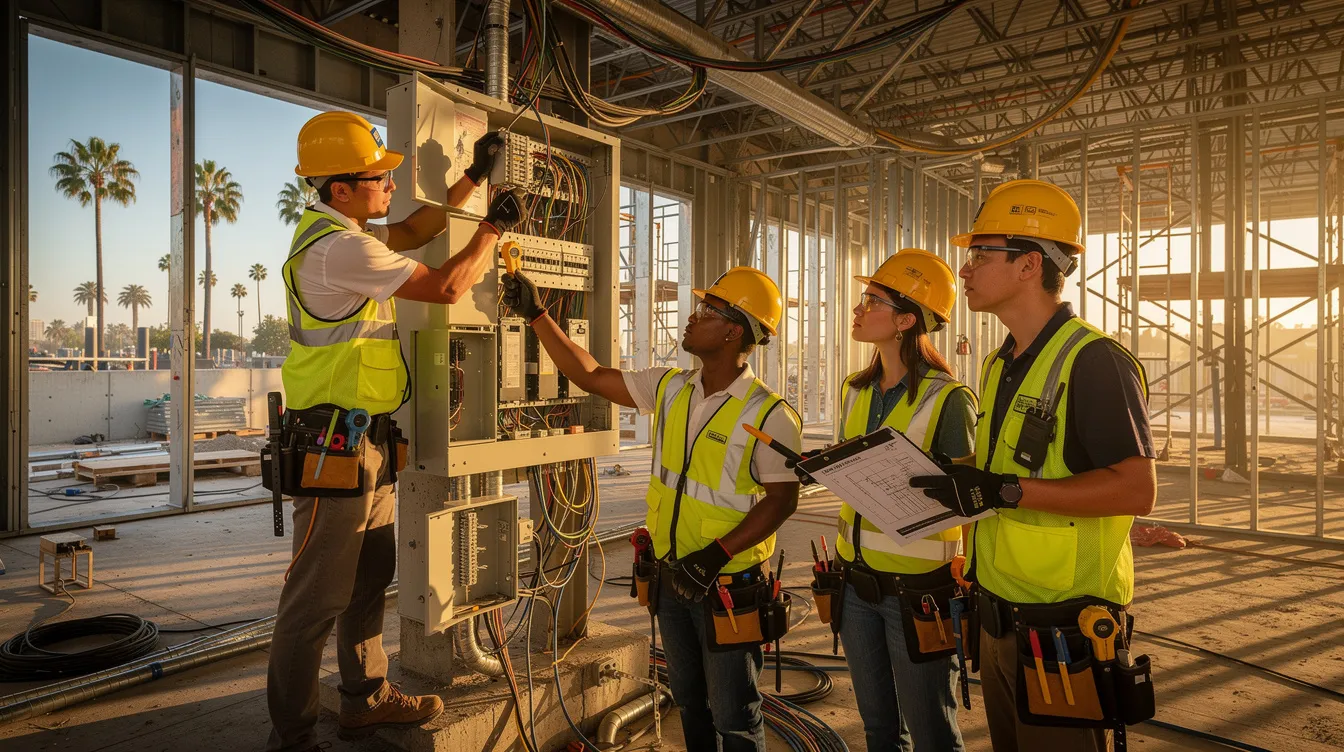
What A Supportive Jobsite Looks Like For Electrical Workers And Low Voltage Roles
A supportive jobsite is not just a safe one. It is a place where you can actually learn. Here is what to look for:
- Crews that explain tasks step by step. Before you install lighting fixtures, read blueprints, or perform maintenance on electrical systems, someone walks you through the process and stays close enough to assist.
- Crews that answer questions without ridicule. You should be able to ask how to use a specific piece of equipment or why a circuit is wired a certain way without getting mocked.
- PPE that fits. Properly sized personal protective equipment is not optional. Gloves, hard hats, safety glasses, and harnesses need to be available in sizes that actually work for every body on site.
- Clean facilities and secure tool storage. Restrooms should be accessible and maintained. Tool storage should be organized and secure, so you don’t have to worry about your gear walking off the job.
Apprentices also receive excellent medical and dental coverage through most registered programs, which is a benefit many people overlook when comparing the trades to other career paths.
Observable Signals On The Ground For Apprenticeship Programs
When you visit a training facility or talk to current apprentices, look for these concrete signals:
- Mentorship pairings are visible. You can see journey-workers actively teaching, not just supervising from a distance.
- Apprentice voices are present. Ask to speak with current or recent apprentices. Programs that welcome this are confident in their culture.
- Clear progression maps exist. You should be able to see exactly how wages start at roughly $21.76 per hour and climb through each period toward journey-level pay. At some California locals, apprentice wages progress from about $40.96 per hour in the first period to over $81 per hour by the final period, with full benefits included.
Apprenticeship programs lead to job security and career advancement, and that path should be transparent before you commit. If you are starting with zero experience, construction jobs with no experience are a practical starting point.
How Inclusive Culture Helps You Learn, Stay Safe, And Finish
When you are not spending energy wondering whether you belong, you learn faster. That is not a motivational statement; it is a practical reality on electrical job sites.
Mentorship accelerates skill development. A formally assigned mentor who knows your learning pace can move you through installing conduit, troubleshooting electrical systems, and operating mechanical equipment more efficiently than being left to watch and guess.
Respectful communication improves safety. When apprentices feel comfortable reporting hazards, asking clarifying questions about a repair procedure, or flagging something that looks wrong, errors drop. Crews where people stay quiet out of fear are dangerous crews.
Inclusive programs retain more apprentices. California’s Division of Apprenticeship Standards tracks completion rates, and programs with strong mentorship, emotional support, and feedback loops consistently perform better. ERiCA grantees are actively measuring retention improvements through supportive worksite culture. Training programs can help prepare students for certification exams to become licensed electricians, but only if those students stay long enough to complete the year-long program.
Track your early milestones: your first solo conduit run, the first panel you wire under supervision, and your first semester of classroom instruction completed. These markers build confidence and keep you moving forward.
Questions To Ask Before You Apply To An Apprenticeship Program
Before you fill out an application or accept an offer, ask these questions. You have every right to know what you are walking into.
Supervision and mentorship:
- Who provides day-to-day supervision on the jobsite?
- Are mentors formally assigned, or does it depend on the crew?
- What does the interview process look like for qualified applicants?
Safety and reporting:
- How do apprentices report harassment, discrimination, or safety concerns?
- Is anti-harassment training required for journey-workers and supervisors?
Tools, PPE, and logistics:
- What tools must I purchase, and what does the employer or company provide?
- Is PPE provided in a range of sizes?
- What does jobsite rotation look like, and how predictable are shifts and travel?
- Will I need a valid California driver’s license for travel between sites?
Inclusion and support:
- Does the program have experience supporting women, non-binary people, veterans, or returning citizens?
- Are there cohort models, childcare supports, or mental health resources available?
- Is there a waiting list, or are applications accepted on an ongoing basis?
These are not demanding questions. They are the questions any serious program should welcome.
Apprenticeship Standards, Mentorship, And Pre-Apprenticeship Pathways
California’s Division of Apprenticeship Standards oversees registered apprenticeship programs statewide. Electrician certification in California is regulated by the Department of Industrial Relations. Understanding how the system works gives you an edge as an applicant.
Key requirements for most electrical apprenticeship programs:
- You must be at least 18 years of age
- A high school diploma or GED equivalent is required
- Many programs require completion of one year of high school algebra (or college algebra) with a minimum grade of C or better
- Electrical apprenticeship entrants often take an aptitude test as part of the application process
- Apprenticeship programs typically require 8,000 hours of on-the-job work
- Apprentices attend school for approximately 800 hours during the program, usually two nights per week in the early years
California allows registration as an Electrician Trainee while completing educational requirements, which means you can begin gaining experience under supervision before finishing all classroom hours. The state also maintains a database of registered apprenticeship programs, including their current status, so you can verify that any program you consider meets apprenticeship standards.
Pre-apprenticeship programs serve as a bridge, helping you build foundational knowledge in areas like safety, basic electrical theory, and construction math before entering a registered five-year program. Some California programs provide pre-apprenticeship or alternative training pathways for new entrants. For a broader look at debt-free pathways, explore a no-debt trade career path.

Los Angeles And Southern California County Notes
Local program requirements may vary by area, so knowing your county’s resources matters.
Los Angeles: The LA/OC Building Trades Council operates an Apprenticeship Readiness Fund with ERiCA funding covering recruitment, childcare, and worksite culture. Joint Apprenticeship Training Committees (JATCs) provide apprenticeship programs under the International Brotherhood of Electrical Workers and National Electrical Contractors Association framework, sponsored jointly by labor and management and tied to union member benefits such as healthcare, savings, and pension plans. Non-union apprenticeship programs are also available through organizations like ABC and WECA in California.
Orange County: The Orange County Electrical Joint Apprenticeship Committee maintains DAS-approved standards for Inside Wireman programs with documented wage scales.
Riverside, San Bernardino, Ventura: These counties are covered by multiple ERiCA grantees and building trades councils running targeted outreach. Craft-specific supports, including plumbing, low voltage, and sheet metal pathways alongside electrical, are expanding through regional training partners.
Look for county-specific outreach events, open houses at training centers, and community college partnerships (many programs integrate at least one semester of technical coursework) to connect with programs near you.
Storytelling Elements And Local Proof Points
From retail to the trades: Sonia Cervantes, a Southern California resident, transitioned from retail work into a pre-apprenticeship program with support that included childcare assistance. That bridge gave her the knowledge, confidence, and proof she needed to enter a registered construction trades program. Stories like hers are becoming more common as ERiCA-funded programs remove the barriers that kept people from even applying.
A veteran’s next chapter: Many veterans bring mechanical aptitude, discipline, and the ability to perform under pressure. California programs increasingly recognize military experience as equivalent preparation, helping veterans construct a new career without starting from zero. The trades offer employment where you can apply the skills the military gave you, from reading technical documents to operating equipment under challenging conditions.
Low voltage as a starting point: Not every electrical apprentice begins with high-voltage commercial work. Some start in low-voltage roles, working on computer networks, fire alarm systems, and data cabling. These roles still require dedication to one full year or more of structured training, but they can serve as an entry into the broader electrical trade for applicants who want to build confidence before moving into larger-scale industrial projects.
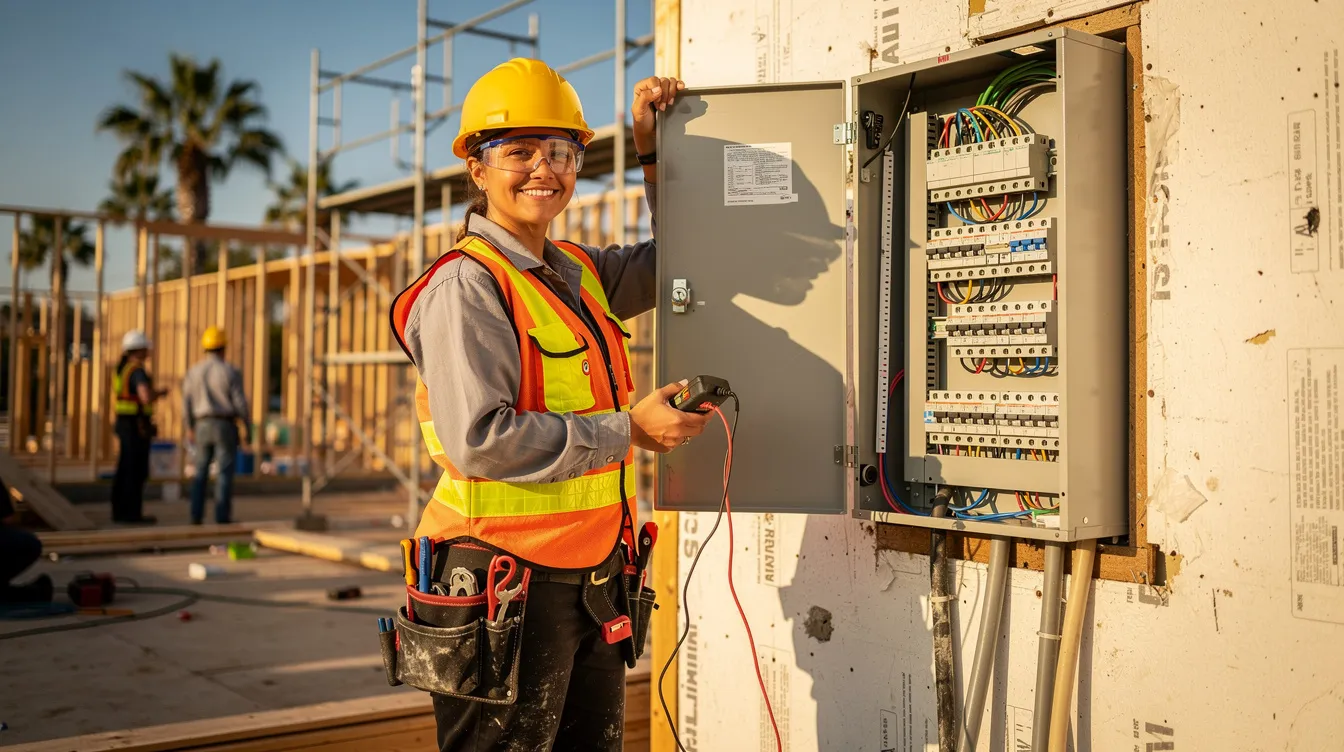
Next Steps For Readers Exploring Electrical Apprenticeship in California
You do not need to have everything figured out today. You just need one next step.
- Take the Trades for All career quiz to see which trade fits your strengths, whether that is electrical, plumbing, sheet metal, or something else entirely
- Explore apprenticeship and pre-apprenticeship listings to find DAS-registered programs in your county that are currently accepting applicants
- Contact Trades for All for personalized guidance, especially if you are a woman, veteran, non-binary person, returning citizen, or a high school graduate trying to decide between college and a career in the skilled trades
California’s electrical trade is building something bigger than circuits and conduit. It is building careers that include you. The crews are getting better, the culture is shifting, and the door is open wider than it has ever been. Walk through it.



