


Second Chance Careers: How the Electrical Trades Helped Elvis Claiborne Rewrite His Story
If you have a record and wonder whether a real career is still possible, this story is for you. Elvis Byron Claiborne went from a prison cell at age 23 to owning his own electrical contracting business, teaching the next generation, and proving that second-chance careers in the skilled trades are not a feel-good myth but a documented reality.
Key Takeaways
- A criminal record does not automatically block you from honest jobs in the skilled trades in California, especially when employers follow the California Fair Chance Act and ban-the-box rules.
- Elvis Byron Claiborne’s journey from incarceration at 23 to electrical contractor and instructor at 43 is central proof that second-chance careers in construction are real and sustainable.
- An electrical apprenticeship, strong apprenticeship mentors, and jobsite skills like bending pipe, pulling wire, and troubleshooting mattered far more than stigma about his past conviction.
- If you are a job seeker with a criminal record, your practical next steps are to explore the electrician career path, understand your fair chance hiring rights, and reach out to Trades For All for guidance in California.
- Your past is one chapter, not your whole book. Second-chance jobs in construction can lead to leadership, teaching, and business ownership.
1. Second Chances in the Trades: Your Record Is Not the End
If you are reading this with a conviction on your record, or if you support someone who does, here is the truth up front: a past conviction does not close the door on a real career in the trades. California law, employer culture in construction, and programs built specifically for people coming home from incarceration all point in the same direction. You have options, and the skilled trades may be among the strongest ones.
In California, most employers with five or more employees must follow the California Fair Chance Act, the state’s ban-the-box law. In practical terms, this means that during hiring, employers cannot ask about your conviction history on initial applications or before making a conditional offer of employment. After a conditional offer, if an employer runs a background check and has concerns, they must conduct an individualized assessment, considering the nature of the conviction, how much time has passed, and whether it directly relates to the job. They must give you written notice, a copy of any report, and at least five business days to respond before making a final decision. Arrests that did not lead to conviction, sealed or dismissed records, juvenile records, and pardoned convictions generally cannot be held against you.
This matters because construction jobs with no experience, including entry-level helper roles and pre-apprenticeships, are among the most accessible pathways for fair chance candidates. Vocational training through these routes can lead to skilled trades careers without requiring a four-year degree. Second-chance careers can involve returning after a long gap or changing industries entirely, and rebuilding options include construction trades, digital marketing, and healthcare. But the trades stand out because they reward what you can do with your hands and your mind, not where you have been.

Trades For All, a California nonprofit initiative powered by ABC Southern California, exists to open construction pathways for everyone, including people coming home from incarceration. Through education, outreach, and connections to pre-apprenticeship and apprenticeship programs, the organization aims to make the workforce accessible regardless of background. Its work runs alongside national organizations like Second Chance, which has operated for nearly 30 years and helps hundreds of formerly incarcerated individuals annually through services including job readiness training that supports successful reintegration into society. Second Chance also provides transitional housing programs for reintegration. Meanwhile, Honest Jobs connects job seekers with criminal records to employers and offers free housing and transportation resources. Together, these resources create a support network no one should ignore.
Now, let me introduce you to the person whose life proves it. Elvis Byron Claiborne’s story, shared in his conversation with host Chris Jorgensen on the Build Without Barriers podcast presented by Trades for All, shows exactly how the electrician career path can take someone from a prison cell to a respected professional, mentor, and business owner.
2. Hitting Bottom and Finding the Trades: Elvis’s Turning Point Inside
Elvis was 23 years old, incarcerated, and facing a serious conviction. He had plenty of time to think, and the conclusion he reached was blunt: nobody was coming to save him. If his life was going to change, he had to rebuild it himself. Starting over after professional setbacks, or after having no profession at all, offers a clean slate for growth, but only if you reach for it.
A pre-release counseling program introduced Elvis to second-chance careers in the construction trades. Through that reentry support, he learned about ABC SoCal and the range of honest jobs available in electrical, ironwork, and plumbing. He chose to pursue electrical work. At that point, his motivation was not a grand vision of becoming a company owner. It was a paycheck. Stability. He could put food on the table for himself and his family. He did not need passion; he needed employment. That starting point is normal, and if you are in that position right now, your reasons are valid.
Before release, Elvis built basic skills. Math review, safety fundamentals, and understanding what an apprenticeship actually looks like day to day. That preparation gave him just enough confidence to apply to an electrical apprenticeship program through ABC SoCal once he was on the outside. The search for a new life had a concrete first step, and he took it.
3. Skills Over Stigma: Growing Through Electrical Apprenticeship
Elvis’s first days on a jobsite as a first-year electrical apprentice were a test. Not of his past, but of his present. Could he bend pipe cleanly? Could he pull wire without wasting material? Could he show up on schedule, every day, ready to work? On that jobsite, nobody cared about his conviction. They cared about whether he could do the job. That environment, where skills mattered more than stigma, became the foundation of his second chance.

The electrical apprenticeship structure gave him a framework he had never had. Classroom instruction at ABC SoCal in Anaheim covered electrical theory, blueprint reading, the National Electrical Code, and safety regulations. On-the-job training, typically spanning five years and roughly 8,000 hours, built the discipline, punctuality, and problem-solving that became second nature. Apprenticeships offer hands-on training and let individuals earn while they learn, and the wage progression from early to later stages can be significant. Many fields value certifications as proof of competency over traditional degrees, and the trades are a prime example.
What made the difference between surviving and thriving was an apprenticeship mentor, and in Elvis’s case, several mentors. They saw potential in him before he saw it himself. They pushed him, corrected him, and treated him as a team member who belonged. Transferable skills such as problem-solving and communication proved valuable every day, and employers increasingly value life experience and resilience over uninterrupted career paths. Elvis had both in abundance.
His electrician career followed clear stages. First-year apprentice learning the basics. Then a trusted hand on a switchgear crew, handling complex assemblies. Then lead on larger commercial projects, coordinating with other trades. Then general foreman, responsible for planning, safety, and entire crews. Each step required new knowledge and deeper commitment. Each step proved that his qualifications were built in the field, not on paper.
On those job sites, the unspoken rule was simple: do you know your work, and can we count on you? That question created a powerful second-chance environment where performance overshadowed criminal records. Mastering concrete tasks like troubleshooting circuits and installing gear rebuilt not just his skills but his identity as a professional, not just a person with a record.
4. From Electrician to Mentor and Business Owner
After years in the field, Elvis was invited back into the classroom as a lab technician at ABC SoCal in Anaheim, helping current apprentices with hands-on electrical practice. It was not just a job. It was recognition that his experience, including the hard parts, made him uniquely qualified to develop the next generation.
He became an instructor because he remembers walking into that classroom unsure he belonged. That memory drives how he teaches. When a new student with a record or from an underrepresented community walks through the door, Elvis understands their hesitation. He creates an environment where respect comes first and everyone in the room has a fair chance to succeed. Community outreach programs like the ones he supports are critical for developing empathetic, mission-driven team members who understand what access and opportunity truly mean.
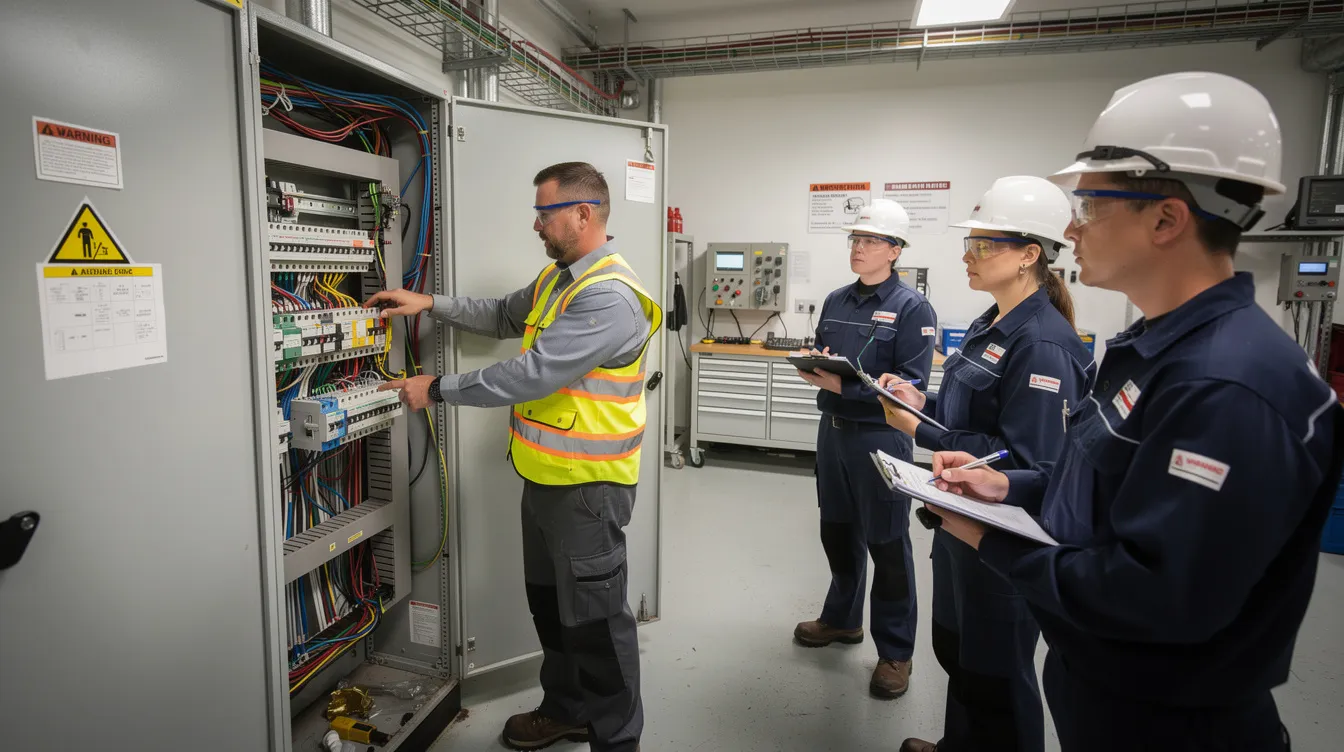
Elvis believes mentorship is not optional in the trades. An apprenticeship mentor can teach not just code and tools but also how to avoid bad habits on the jobsite: unsafe shortcuts, negativity, or giving up when things get tough. Skills like digital literacy and emotional intelligence are increasingly crucial in the workforce, and the ability to connect with and guide others is what separates a good electrician from a great one. Organizations that support second-chance hires often focus on individuals with non-linear career paths, and Elvis is living proof of why that approach works.
After roughly 20 years in the trade and at around age 43, Elvis made his leap into owning his own electrical contracting business. Business ownership was not a fantasy. It was the natural result of two decades of commitment, learning, and showing up. He now serves customers, manages employees, and runs a company built on the values he learned as an apprentice. That position, from incarceration to business owner, is a long-term second-chance goal readers can realistically work toward.
Elvis also gives back through the ABC SoCal Alumni Committee and by supporting a trades camp for young girls, opening doors for people who might never have considered the trades. Regardless of race, religion, gender identity, sexual orientation, age, disability, or status, he believes the trades hold endless opportunities for anyone willing to learn. His participation in these efforts reflects a deep commitment to workforce diversity and shows that second-chance careers aren’t just about avoiding trouble. They can grow into leadership, teaching, and entrepreneurship over time.
5. Your Next Steps to a Second Chance Career in the Electrical Trades
Whether you are a job seeker with a record looking for a path forward, a family or reentry staff person supporting someone’s return, or a contractor deciding whether to hire fair chance candidates, this section is for you. Career transitions succeed when you identify target roles and map required skills, and the electrical trades offer one of the clearest maps available.
For Job Seekers: How to Become an Electrician in California
Here is a high-level roadmap:
- Explore pre-apprenticeship programs. These build math, safety basics, and confidence before you apply to a formal apprenticeship. Job readiness training through reentry organizations can give you the foundation you need.
- Apply for an electrical apprenticeship. Programs like those at ABC SoCal accept applicants who are at least 18, have a high school diploma or GED, and can demonstrate basic algebra competency. Short-term credentials can bridge the skills gap for individuals transitioning careers.
- Start in construction jobs with no experience. Entry-level helper or laborer roles let you build skills on real job sites while you prepare for or wait on apprenticeship openings.
- Build your resume and network. Informational interviews can help you build connections in your new field. Ask local union halls, community organizations, and reentry programs for referrals.
Know your rights under the California Fair Chance Act: employers generally cannot ask about convictions before a conditional offer, cannot use arrests without conviction or sealed records, and must give you a written letter explaining any preliminary decision to withdraw an offer along with time to respond. Keep records of every application, every interview, and any written notice you receive. If you believe your rights were violated, connect with a legal aid organization, a reentry attorney, or file a complaint with the California Civil Rights Department. You can also search your local community or use a quick Google review of your area’s reentry services to find support. Honest Jobs connects job seekers with criminal records to employers specifically interested in fair chance hiring.
Freelancing and consulting can provide flexible work opportunities as you build toward a full career without a college degree, and digital marketing, for example, focuses on a portfolio of results rather than a traditional resume. But the trades offer something few other fields can match: structured advancement, rising wages, benefits, and a future you build with your own hands.
For Contractors and Hiring Managers
Elvis’s core advice to every hiring manager and contractor is direct: judge the person standing in front of you, not the paperwork behind them. People fighting for a second chance are often among the hardest-working and most loyal hires on your crew. An equal opportunity employer who embraces fair chance candidates strengthens their team and their company.
Partnering with organizations like Trades For All and ABC SoCal can help you connect with prepared fair chance applicants and strengthen your workforce. Whether you are a local contractor or manage a large commercial operation, these candidates bring resilience, gratitude, and a determination to succeed that is difficult to find elsewhere. Emotional intelligence is a core competency valued not just in HR and talent acquisition roles but on every jobsite where leadership matters. Elvis proves what happens when a contractor gives someone a real opportunity.
Whether you are in California, Texas, or anywhere else, the principles are the same: fair chance hiring benefits everyone. While TX and other states have their own rules, California’s framework sets a strong example. Employers contacted by prepared, motivated candidates with clean records should look beyond the paperwork and see the person. Second Chance, which has helped hundreds of formerly incarcerated individuals, shows that when people are given a real chance, they become some of the most committed, employed, and productive members of any team.
The Final Word from Elvis
Your past is a chapter, not the whole book.
Elvis Claiborne’s life is proof that a second-chance career in the trades can take you from rock bottom to respected professional, from apprentice to business owner, from someone unsure he belonged to a person who opens the door for others. His success is not an exception. It is what becomes possible when the right support, the right opportunity, and the right effort come together.
Your next step is simple: explore the electrical trade, learn the basics of your fair chance rights in California, and join the community of people building real futures. Visit the Trades For All website to get started, or reach out to learn about veterans and career-changer pathways if that fits your situation. Technical certifications can help you secure entry-level employment in IT and other fields, but if you want to work with your hands and build something lasting, the trades are waiting.
Frequently Asked Questions
Can I start an electrical apprenticeship in California if I have a felony conviction?
Many electrical apprenticeship programs in California will consider applicants with criminal records. Decisions typically depend on the nature of the conviction, how much time has passed, and the position’s specific safety or licensing requirements. Do not assume you will be automatically rejected. Contact programs directly, ask about their policies, and be upfront about your situation. Programs like ABC SoCal have a track record of working with fair chance candidates.
What parts of my criminal record can employers usually not use against me?
Under California law, most employers generally may not consider arrests that did not lead to a conviction, sealed or dismissed convictions, juvenile records, or convictions for which you received a pardon or certificate of rehabilitation. Federal protections may also apply in certain cases. Every situation is different, so check with a legal aid or reentry attorney to understand exactly what applies to you and whether any aspects of your record can be cleared.
How do I talk about my past conviction in a job interview for construction work?
Keep it brief and honest. Focus on what you have done since: classes, counseling, pre-apprenticeship training, or any other steps you have taken to grow. Connect your story to your motivation to work hard and be a reliable team member. Then pivot quickly to your skills, your safety mindset, and your commitment to showing up every day. A hiring manager in the trades respects directness and work ethic above all.
Are there construction jobs with no experience that can lead to long-term careers?
Yes. Many entry-level construction helper or laborer roles, pre-apprenticeships, and starting positions in electrical, carpentry, or other trades do not require prior experience. These can become stepping stones into formal apprenticeships and full second-chance careers if you show up consistently, learn on the job, and take advantage of every training opportunity. The workplace values what you can do today and what you are willing to learn tomorrow.
How can Trades For All help someone in California who is coming home from incarceration?
Trades For All provides information about construction career paths, connects people to pre-apprenticeship and apprenticeship programs like those at ABC SoCal, and shares stories like Elvis Claiborne’s for motivation and proof. The organization also helps both job seekers and employers understand fair chance practices so that more individuals with records can access honest jobs in the trades. Visit their website to explore resources, find local programs, and take your first step toward a second-chance career.



