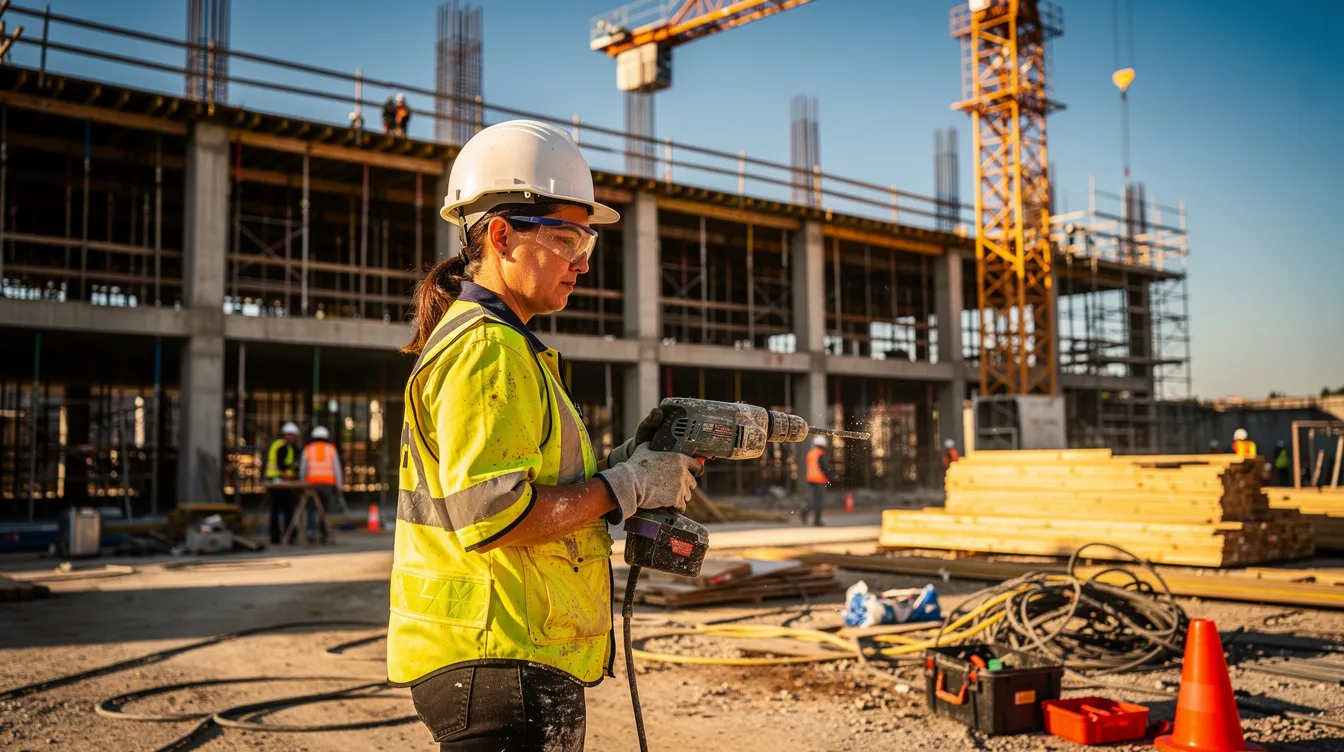
Women in trades leadership is not a title someone hands you after twenty years. It is a set of everyday actions that start on your very first California jobsite: speaking up about safety, helping a newer apprentice with a tool, communicating clearly with a foreman, and showing up ready to solve problems. If you are a woman in California who wants to build a career in the skilled trades, leadership is something you can grow into one step at a time.
Key Takeaways
Women in trades leadership in California means exercising real influence on a jobsite through communication, reliability, and technical skill, not waiting for a formal promotion to make an impact.
- Leadership is a progression, not a single moment. It typically moves from pre-apprenticeship or entry-level exposure to registered apprenticeship programs, then into roles like crew leads, foreperson, estimator, or project coordinator.
- California’s infrastructure supports advancement. DAS apprenticeship standards, ERiCA-funded outreach, community colleges, and growing construction industry demand make it possible for women in the trades to advance without a four-year degree. California’s median hourly wage for electricians alone is $66.03, which signals the earning power available to those who build their skills.
- Soft skills matter as much as technical mastery. Communication, safety focus, reliability, mentoring others, and problem-solving are the leadership behaviors that earn trust on a crew long before a title changes.
- The numbers show both the gap and the opportunity. Women constitute only 3 to 4% of the building trades workforce nationally, which means there is enormous room for growth and a real need for more women leaders.
- This article gives readers in Southern California counties (Los Angeles, Orange, Riverside, San Bernardino, and Ventura) specific next steps to move toward leadership in the skilled trades.
What “Women in Trades Leadership” Really Means in California
In California, women in construction leadership include crew leaders, forepersons, inspectors, safety coordinators, estimators, and operations roles that keep public works and private projects moving safely and on time. The history of women in construction includes prominent figures leading major projects, yet women in trades have historically faced barriers to advancement that are less pronounced in fields where women are better represented.
Women in the construction industry often begin with hands-on tasks, then grow into planning daily work, coordinating with inspectors, reading plans, and coaching new apprentices on site. Here is what leadership roles and responsibilities look like in real jobsite language:
- Crew lead or foreperson: Assigns daily tasks, runs safety huddles, communicates with subcontractors and project managers.
- Safety coordinator: Enforces fall protection, PPE compliance, and OSHA standards; stops work when conditions are unsafe.
- Estimator or project coordinator: Reviews blueprints, calculates materials, tracks budgets, and keeps schedules on target.
- Mentor or training lead: Guides newer apprentices through tool use, code requirements, and jobsite communication norms.
As of 2025, women accounted for only about 4.3% of construction trade workers in the U.S. In 1978, President Carter set a policy that aimed for 6.9% women in construction, a goal that has still not been met nationally decades later. That is exactly why California-focused pathways and support systems matter so much for closing this gap. Leadership is visible on day one in behaviors like speaking up about safety, asking smart questions, and owning mistakes, long before a job title changes.

From First Jobsite to Crew Lead: A Typical California Path
The path from first exposure to crew leader is not a mystery. It follows a pattern that thousands of California tradespeople have walked. Here is what it typically looks like for a woman building her career in the skilled trades:
- Exposure (high school or community college): Discovering the trades through CTE classes, career fairs, or hands-on bootcamps, and sometimes by taking a class as a first entry point. California’s pre-apprenticeship programs expose students to various trades, giving them a feel for the work before they commit.
- Pre-apprenticeship (6 to 12 months): Building foundational skills in math, measurement, blueprint reading, and hand and power tools. Pre-apprenticeship programs often target women and underserved groups, and may include exposure to structural work on bridges before formal training begins. Participants in pre-apprenticeships need a GED or high school diploma.
- Registered apprenticeship (3 to 5 years): Entering a DAS registered program in a trade like electrical, plumbing, low voltage, or sheet metal/HVAC. Apprentices in California can earn between $15 and $50 per hour while they learn. Women in construction can earn between $25 and $50 per hour depending on the trade and stage of training.
- Early leadership behaviors (years 2 to 3): Running small tasks independently, training newer apprentices, communicating with forepersons about materials and schedule. These responsibilities arrive before the official title.
- Crew lead or foreperson (post-journey level): After journeying out, women with consistent performance, a clean safety record, and willingness to learn are often the first considered for formal leadership roles.
Advancement speed varies by trade and employer. In electrical work, for example, the standard is 8,000 hours of on-the-job training plus 720 hours of classroom instruction across approximately four years. But universal signals for promotion remain the same: show up, do the work well, stay safe, and help others learn.
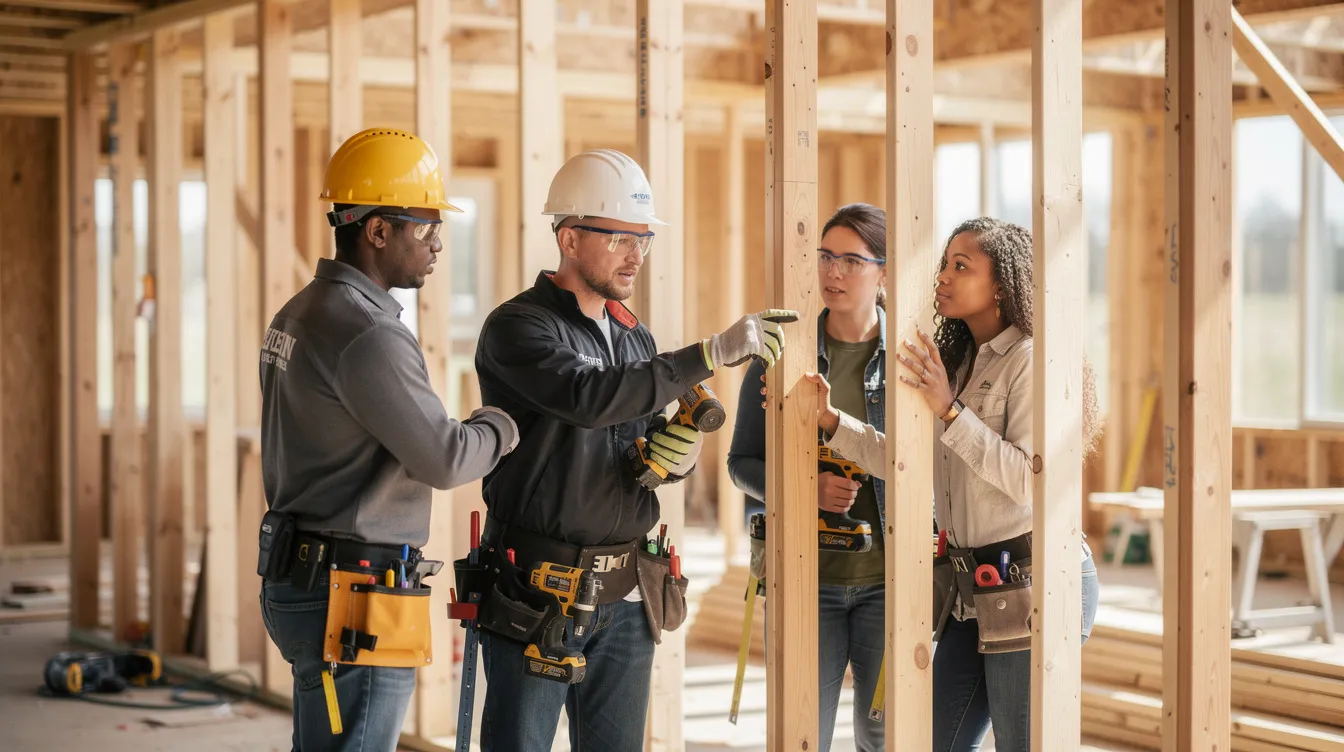
What Leadership Looks Like Day to Day on a Jobsite
A typical morning for a woman crew lead in California might start with reviewing the day’s plan, confirming that the right materials arrived, checking safety gear, and coordinating with subcontractors before anyone picks up a power tool. Leadership in the trades often involves long hours, irregular schedules, and demanding environments, but the reward is tangible: you see what you built at the end of every day.
Key on-the-job leadership behaviors include:
- Arriving early and checking that tools, materials, and permits match the day’s scope, especially on public works jobs.
- Leading a short safety huddle at the start of shift, covering hazards, fall protection, and emergency procedures.
- Explaining steps clearly to a first-year apprentice or translating technical drawings into task lists for the team. Women leaders can help establish expectations around respect and communication in these daily interactions.
- Enforcing apprenticeship standards consistently, for example, stopping work if fall protection is not in place, even under schedule pressure.
- Handling documentation: logging hours for apprenticeship programs, tracking change orders, or updating punch lists for inspectors.
Leadership is not about being the loudest voice. It is about being the most reliable, the most prepared, and the most willing to help others succeed on construction sites.
Why California Apprenticeship Pathways Matter for Advancement
California’s Division of Apprenticeship Standards sets apprenticeship standards that tie classroom learning at community colleges or training centers to paid on the job training. This structure creates a clear path from entry to journey level and, for those who want it, into leadership.
Here is how the framework works in practice:
- Classroom instruction: A minimum of 144 hours per year, covering code, safety, and trade theory.
- On-the-job training: At least 2,000 hours of paid work annually, with rotation across different work processes.
- Entry requirements: California’s apprenticeship programs require a high school diploma or GED.
- Wage progression: Apprentices earn while they learn, and California’s median hourly wage for electricians reaches $66.03 at the journey level, making this a career with real job security and upward mobility.
Pre-apprenticeship programs in Southern California can help women build math, measurement, and tool basics before they apply to a registered apprenticeship program, reducing stress and building confidence in the first year on site. Apprentices who show up, log hours accurately, pass exams, and demonstrate leadership behaviors are often the first considered for crew leader roles once they complete their program.
Trades For All can connect readers to specific apprenticeship programs in trades like electrical, plumbing, low voltage, and HVAC sheet metal across Los Angeles, Orange, Riverside, San Bernardino, and Ventura Counties. Mentorship through apprenticeship mentor support is one of the most effective ways to accelerate this growth.
How ERiCA Funded Outreach and Local Programs Support Women’s Growth
California’s Equal Representation in Construction Apprenticeship (ERiCA) initiative funds outreach and support to bring more women, veterans, and other underrepresented groups into the skilled trades, with backing from a state labor department. Round 2 of ERiCA, covering 2025 to 2027, designates approximately $26.17 million across recruitment, childcare, and worksite culture categories. This is not a new idea. In 1992, Congress allocated $1 million annually for women’s apprenticeship grants at the federal level. In 2006, Illinois allocated $6.25 million specifically for women’s pre-apprenticeships. Maine increased women’s share of the construction workforce to 11% through targeted pre-apprenticeship funding and support.
Trades For All, powered by an ERiCA grant through ABC Southern California, is committed to helping support women in the trades who want to advance, not just enter, through career exploration tools, pre-apprenticeship referrals, and information sessions. Specific local touchpoints include school presentations, job fairs, and hands-on exploration days in counties like Los Angeles and Orange, where women can try construction tasks under guidance and connect with workforce partners across construction and transportation pathways.
ERiCA-funded efforts lead to practical outcomes: helping a woman move from a community college construction course into a paid apprenticeship program with clear next steps toward leadership. For a deeper dive into programs and supports, explore the women in the trades pathway guide on Trades For All.
Mentorship, Networks, and Inclusive Jobsite Culture
While technical training matters, mentorship and inclusive jobsite culture often determine whether women stay long enough to reach leadership positions. Historical underrepresentation has created a shortage of mentors for women in trades, and women leaders often face skepticism about their technical expertise. Job sites can feature entrenched “macho” cultures and microaggressions. Women in construction face hazing and hostility on job sites, and women often encounter unsupportive jobsite environments that affect retention.
A good mentor in a California apprenticeship context checks in weekly, answers questions about union and non-union pathways, explains how unions fit into those options, explains unwritten jobsite rules, and advocates for fair training opportunities. Mentorship can come from journey-level tradespeople of any gender, apprenticeship instructors, or a women-focused construction organization that hosts networking opportunities and upcoming events in the region. Tradeswomen Inc. is one example of that kind of resource. Women in leadership can create mentoring and sponsorship opportunities for other women, which compounds the effect across a workforce.
Modern women leaders have helped shift workplace culture away from exclusionary practices. Inclusive jobsite culture basics, such as clear anti harassment rules, well-fitted PPE, and respect for all apprentices, affect how comfortable women feel taking on visible leadership tasks. One apprentice who stayed in the electrical trade credited her mentor for walking her through a difficult first year when she was the only woman on her crew. That mentorship made the difference between quitting and becoming a crew lead within five years.
Skills That Turn a Strong Apprentice Into a Trusted Leader
Leadership growth in the construction industry is not only about being the fastest with a tool. It is about a combination of technical, communication, and organizational skills. Diverse leadership teams bring varied perspectives that optimize decision-making on complex projects. Female leaders often emphasize rigorous safety protocols and health standards, which improve outcomes for entire crews.
Technical skills for women in construction leadership:
- Reading blueprints and understanding sequences of work across multiple trades
- Meeting California building and safety codes on public works and private projects
- Mastering hand and power tools relevant to your trade
- Accurately tracking hours and documentation for apprenticeship standards
Essential soft skills:
- Active listening and giving clear, respectful feedback
- Staying calm when a delivery is late or an inspection delays the schedule
- Explaining solutions to both field crews and office staff
- Building collaboration across trades and departments on site to support stronger long-term employment outcomes
Safety leadership:
- Maintaining an OSHA-compliant workspace
- Speaking up about near misses and making sure new team members know emergency procedures on California job sites
- Modeling consistent use of PPE and fall protection
Resilience and problem solving:
- Adjusting the day’s plan when weather or inspections disrupt the workflow
- Communicating changes clearly to the crew and keeping morale steady
- Treating setbacks as normal parts of the job, not reasons to stop
These are skills you can practice during any apprenticeship program and refine over a career.
Building Leadership Early: Steps for Students and Career Changers
Leadership potential can be developed before someone ever steps on a jobsite. Whether you are a high school student, a community college learner, or an adult changing careers, you can start building the foundation now. California’s pre-apprenticeship programs require a high school diploma, so meeting that requirement is the first step.
For high school students:
- Join a construction or robotics club, or take CTE classes tied to the construction industry.
- Participate in summer bootcamps or pre-apprenticeship exploration days in Southern California.
- Ask your school counselor about upcoming events hosted by organizations focused on women in construction.
For community college students:
- Complete basic construction math and blueprint reading courses.
- Attend information sessions with local apprenticeship coordinators and ask about women-in-construction leadership success stories in California.
- Connect with the national association chapters or local construction trades council members for mentorship programs and networking.
For career changers:
- Shadow a crew for a day or volunteer with community build projects to get hands-on experience and explore pathways that can also lead into manufacturing work.
- Attend networking opportunities hosted by local women in the trades groups.
- Use tools like the Trades For All career quiz, podcast episodes, and women in construction career stories to picture your own path from entry into leadership.
Efforts to promote inclusivity in the trades can attract a broader demographic to skilled careers, and women in the trades can challenge outdated assumptions and make the industry more attractive to younger generations.
How Employers and Supervisors Can Open Doors for Women Leaders
Supervisors, forepersons, and company owners in California can either limit or accelerate women’s advancement depending on how they assign work and recognize potential. Women in leadership roles within the trades industry drive significant operational advantages, including stronger safety records, better crew communication, and lower turnover. Women often receive less training than male counterparts in construction, so intentional action from employers matters.
Concrete ways employers can support women in trades leadership:
- Rotate tasks fairly so all apprentices get time on core tools, not just cleanup duties.
- Invite women to pre-task planning meetings and back them up when they make safety calls.
- Use clear, written criteria for moving someone from apprentice to crew lead, tying expectations to apprenticeship standards rather than personal preference.
- Encourage women to attend leadership workshops, local conferences, or internal training on communication and project planning. This investment often pays off through lower turnover and stronger, more skilled crews.
- Create a team culture where respect is the baseline. A workforce that feels supported performs better and stays longer.
Employers and apprentices alike can use resources like the Women in the Trades Pathway Guide and Skilled Trades Careers for Women to understand what advancement looks like and how to create the conditions for it.
Next Steps: How Trades For All Helps You Move Toward Leadership
If you are a woman in California who wants to advance in the trades, leadership is something you build one decision and one skill at a time. You do not need to have everything figured out today.
- Explore a trade: Look into electrical, plumbing, low voltage, or sheet metal/HVAC careers to find what fits your interests and strengths.
- Take the career quiz: Trades For All offers a career quiz to help you narrow your options based on your skills and goals.
- Connect with programs: Reach out to local pre-apprenticeship and apprenticeship programs that match your interests through Trades For All’s network of training partners.
- Use the resources: The women in the trades pathway guide, inclusive jobsite culture basics, apprenticeship mentor support, and women in construction career stories are all designed to help you plan your advancement step by step.
- Get local: Residents of Los Angeles, Orange, Riverside, San Bernardino, and Ventura Counties can use Trades For All contact forms or events listings to find regional partners, community colleges, and training programs near you.
Leadership is not about being perfect. It is about learning, showing up, and taking the next opportunity to lead a task, a conversation, or a crew.

FAQ: Women in Trades Leadership in California
These FAQs address common questions about women in trades leadership that go beyond what the sections above cover.
How long does it usually take for a woman in California to move from new apprentice to crew leader?
For many trades, apprenticeship programs last about 3 to 5 years. Women who progress steadily, pass required classes, and demonstrate leadership behaviors often begin taking on crew lead-style responsibilities near the end of apprenticeship or within the first few years as a journey-level worker. The timeline depends on the trade, the employer, and individual initiative, but consistency and a clean safety record are the biggest accelerators.
Do I need a four-year college degree to reach leadership in the construction industry?
Most field leadership roles in the skilled trades, such as foreman or superintendent, grow from hands-on experience and apprenticeship training rather than a bachelor’s degree. Some project management or engineering roles may require additional education, but crew leadership on a California jobsite is built through demonstrated skill, reliability, and the ability to guide a team, not a diploma.
What if I am the only woman on my crew? Can I still become a leader?
Many women in the trades, California-wide, have advanced as the only woman on their crew. It is harder without visible peers, but strategies that help include finding mentors on other job sites, joining regional women-in-construction networks, and using Trades For All resources to stay connected and supported. Being the only woman on a crew does not mean you have to figure everything out alone.
How can I balance family responsibilities with apprenticeship programs and leadership goals?
Talk with program coordinators about schedule options and lean on family or community childcare support. Some ERiCA-funded programs offer up to $10,000 per year in childcare assistance for eligible apprentices. Planning commute and study time thoughtfully helps, and many employers in California are becoming more flexible as they work to retain women in the trades and build a more skilled workforce.
Where can I learn more about real women in construction leadership stories?
Trades For All shares women in construction career stories and podcast episodes that highlight real journeys from first day on site into long-term leadership roles. These are practical, California-specific resources that can give you both inspiration and a concrete sense of what the path looks like. Visit Trades For All to access testimonials, career stories, and community resources built for your future.